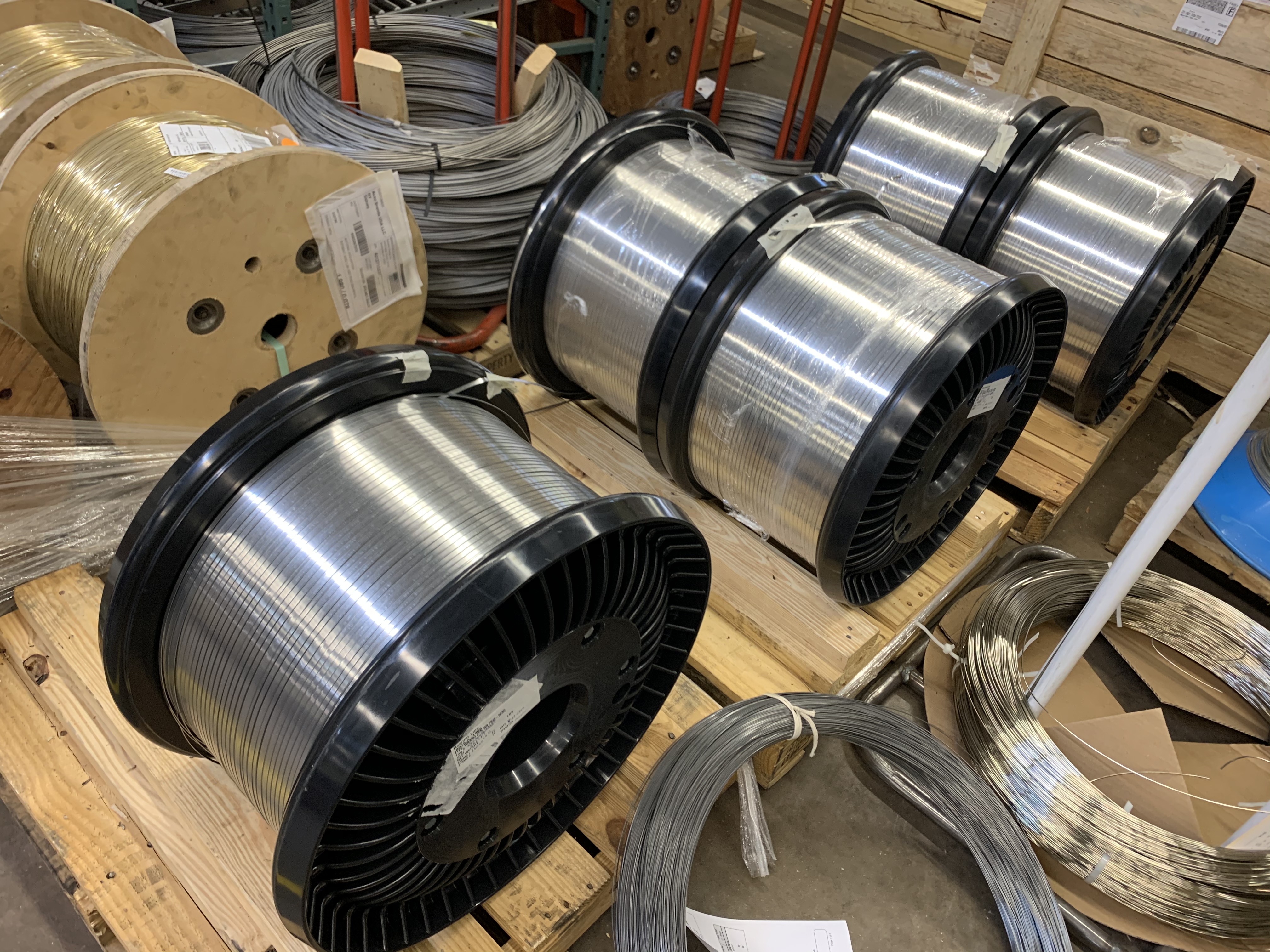
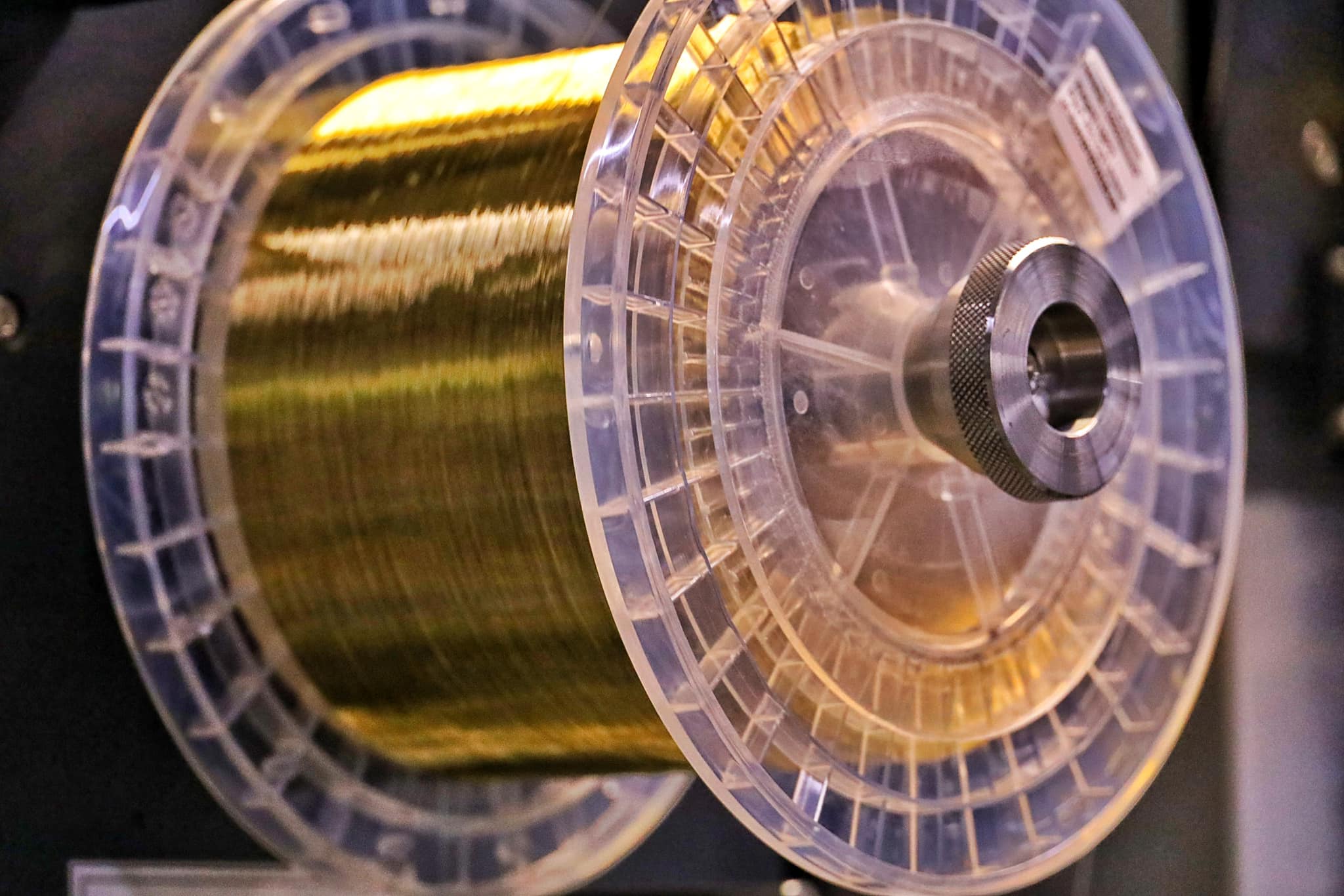
For manufacturers using wire, tubing, strip material, or precious metals, material utilization and part quality directly affect profitability. While many companies still cut linear parts in-house, outsourcing to a precision cut-to-length provider can significantly reduce waste, improve consistency, and lower overall production costs.
At Novo Precision, our wire-cutting and wire-straightening services have helped customers optimize their manufacturing processes for more than 30 years. Through advanced quill-on-quill cutting technology and the ability to process material directly from a spool, we help customers maximize material yield while minimizing scrap.
Why Is Quill on Quill the Gold Standard for Precision Wire Cutting?
In today’s manufacturing landscape, precision and consistency are essential. Whether you’re producing components for medical devices, electronics, automotive systems, or industrial assemblies, the quality of each cut directly affects downstream performance. That’s why quill on quill cutting is rapidly emerging as the gold standard for wire, tube, and small-diameter material processing.
This blog highlights 6 reasons why quill on quill cutting is becoming a preferred method for precision wire applications.
Quillonquill cutting uses two opposing support sleeves (quills) to hold the material firmly on both sides of the cut. This dual support keeps the wire, strip, or tube stable at the exact moment the blade makes contact. By holding the material firmly from both directions, the system eliminates the micro‑movements that cause:
Burrs
Deflection
Wandering cut lines
Out-of-tolerance cuts
This stability is especially important when cutting small-diameter wire, flat parts, thin-wall tubing, or flexible materials that tend to move under load.