What Is Quill on Quill Cutting?
Posted on
What Is Quill on Quill Cutting?
Quill on quill cutting uses two opposing support sleeves (quills) to hold the material firmly on both sides of the cut. This dual support keeps the wire, strip, or tube stable at the exact moment the blade makes contact. By holding the material firmly from both directions, the system eliminates the micro‑movements that cause:
- Burrs
- Deflection
- Wandering cut lines
- Out-of-tolerance cuts
This stability is especially important when cutting small-diameter wire, flat parts, thin-wall tubing, or flexible materials that tend to move under load.
A Dual‑Support Cutting Method Designed for Stability
In precision manufacturing, how the material is cut determines the quality of downstream products and processes. Whether you’re cutting wire, tube, or flat materials, even slight variations in cut length, squareness, or surface condition can lead to rework or scrap. That’s why many manufacturers are turning to quill on quill cutting, a method that delivers exceptional stability, accuracy, and repeatability. This blog article will discuss how quill on quill cutting enables:
- Cleaner, More Accurate Cuts
- Higher Speeds Without Sacrificing Quality
- Longer Tool Life and Lower Maintenance
- Reduced Scrap and Higher Yield
Cleaner, More Accurate Cuts
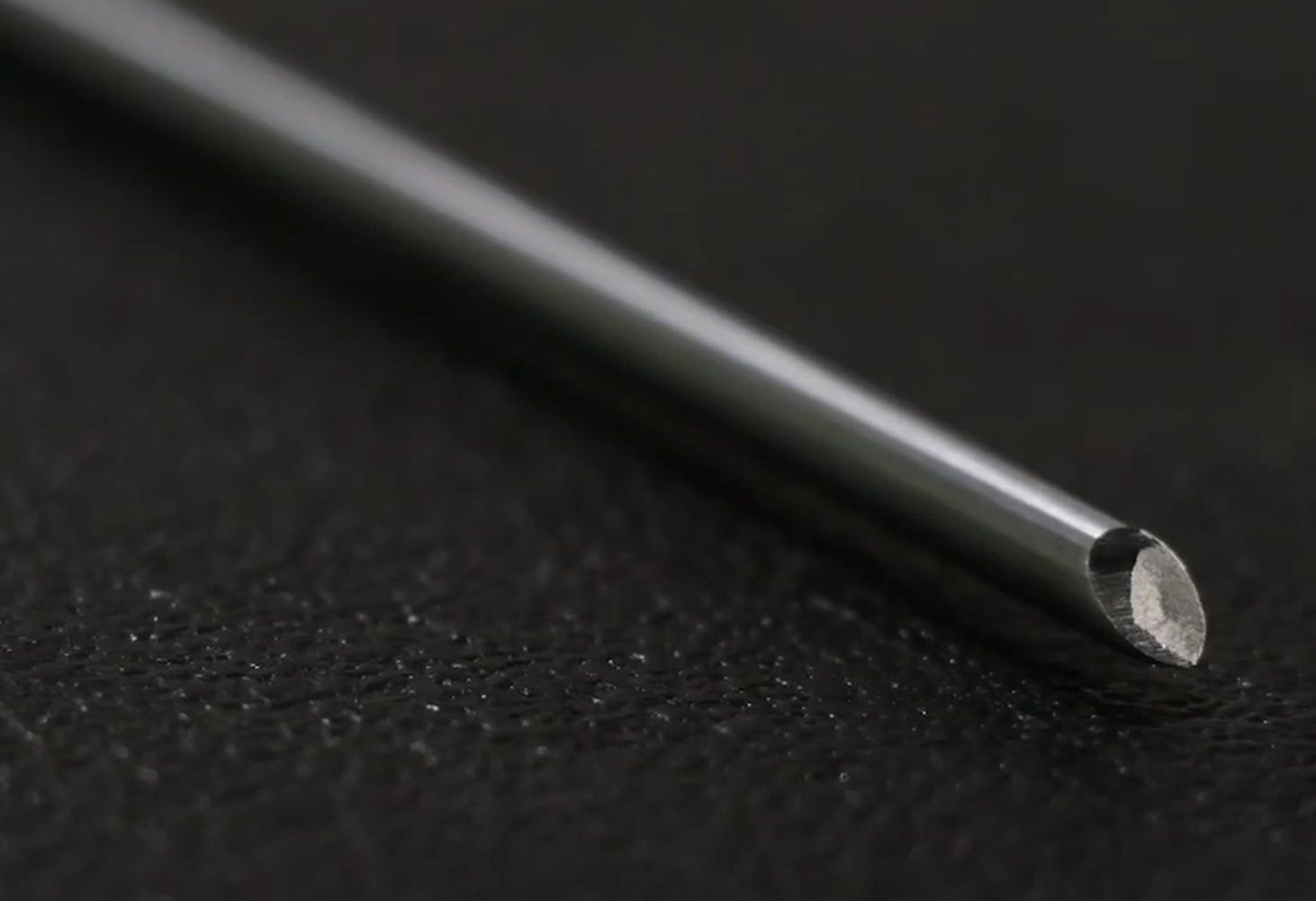
Because the material being cut is fully constrained, the cutting tool can engage cleanly without crushing or distorting it. As a result, tighter tolerances can be achieved. Novo Precision can maintain a cut length tolerance down to +/- .002”. Additionally, this method improves perpendicularity, provides cleaner cut ends, and prevents burr formation. See how the traveling quill and the stationary quill provide a nice finish with tight tolerances in this video.
Higher Speeds Without Sacrificing Quality
With the material stabilized, quill on quill systems can run higher spindle speeds, faster feed rates, and obtain more aggressive cutting parameters. This allows manufacturers to increase throughput while maintaining the same high-quality cut finish.
Longer Tool Life and Lower Maintenance
Reduced vibration means reduced shock to the cutting tool. Over time, this leads to:
- Longer blade life
- More consistent wear
- Fewer tool changes
- Lower maintenance costs
For high‑volume operations, labor and cost savings can be recognized quickly.
Reduced Scrap and Higher Yield
Precision feeding and stable cutting dramatically reduce miscuts. Manufacturers benefit from reduced material waste and increased parts per run. This is a significant advantage for parts that feed into secondary processes like crimping, welding, plating, or automated assembly - where a poor cut can cause jams, rejects, or quality failures.
Quill on Quill Cutting is A Smarter Way to Cut Small Wires and Tubes
Quill on quill cutting offers a combination of stability, speed, and precision. For manufacturers who need consistent quality and reliable performance, especially in high‑volume or high‑precision environments, it’s an approach that delivers measurable results. For more information about quill on quill cutting technique, visit the Novo Precision Wire Cutting & Wire Straightening Services.